Moving furniture during bad weather can make an already difficult relocation more challenging. Rain, snow, ice, strong winds, and extreme temperatures can damage furniture while also creating slippery surfaces and unsafe conditions for anyone carrying heavy items.
With the right preparation, protective materials, and moving techniques, you can reduce the risk of water damage, scratches, slips, and other problems. Planning your route and keeping furniture exposed to bad weather for as little time as possible can also make the moving process safer and more efficient. If you’re relocating to a new apartment, Commonwealth apartment movers can help transport your furniture while keeping your move organized.
Can You Move Furniture During Bad Weather?
You can move furniture during some types of bad weather, but conditions should be evaluated before you begin. Light rain may be manageable with proper protection, while severe storms, lightning, flooding, icy walkways, or dangerous winds may make postponing the move the safer option.
If you must move during poor weather, prepare your furniture and pathways before carrying anything outside. Professional movers can also help reduce the amount of time furniture spends exposed to rain, snow, or other difficult conditions.
Supplies You’ll Need to Move Furniture in Bad Weather
Having the right supplies ready before moving day can help protect furniture from moisture, dirt, impacts, and accidental damage. Weather protection should be planned in addition to the normal padding and equipment used for moving heavy furniture.
- Plastic Furniture Covers: Plastic covers create a barrier against rain and moisture while furniture is being carried or temporarily exposed outdoors. Use properly fitted covers around upholstered and wooden furniture to reduce direct exposure to wet conditions.
- Moving Blankets: Moving blankets provide cushioning against scratches, dents, and impacts during handling and transportation. Because blankets can absorb rain, cover them with plastic when weather protection is necessary.
- Stretch Wrap: Plastic stretch wrap can help secure protective materials and create an additional moisture barrier around furniture. Wrap furniture carefully without trapping excessive moisture underneath the covering.
- Tarps: Tarps can provide temporary overhead protection when furniture must pass through an uncovered area. Make sure they are positioned securely and do not create additional slipping or tripping hazards.
- Furniture Dolly: A furniture dolly can reduce the amount of time heavy furniture spends being carried outdoors. Using wheels can also reduce physical strain when moving large pieces across suitable surfaces.
- Moving Straps: Moving straps help multiple people control bulky furniture while carrying it through narrow or difficult areas. They can improve handling when used correctly with furniture that is appropriate for strap-assisted movement.
- Floor Protection: Tarps, mats, flattened cardboard, or other suitable floor coverings can help protect indoor floors from wet shoes and moving equipment. Creating a protected pathway also reduces the amount of moisture and debris tracked throughout the home.
Having these materials prepared before the first piece of furniture leaves the house can help keep the process organized and reduce unnecessary exposure to bad weather.
How to Move Furniture in the Rain
Rain is one of the most common weather problems on moving day because water can damage wood, upholstery, cardboard, and other materials. The goal should be to minimize the amount of time furniture remains outside while creating protective barriers against moisture.
Check the Weather Before Moving
Check the forecast before loading furniture and pay attention to expected rainfall, wind, thunderstorms, and changing conditions. If severe weather is approaching, consider whether the move can safely be delayed. When moving must continue, identify the driest available period and prepare your equipment before starting.
Wrap Furniture Before Taking It Outside
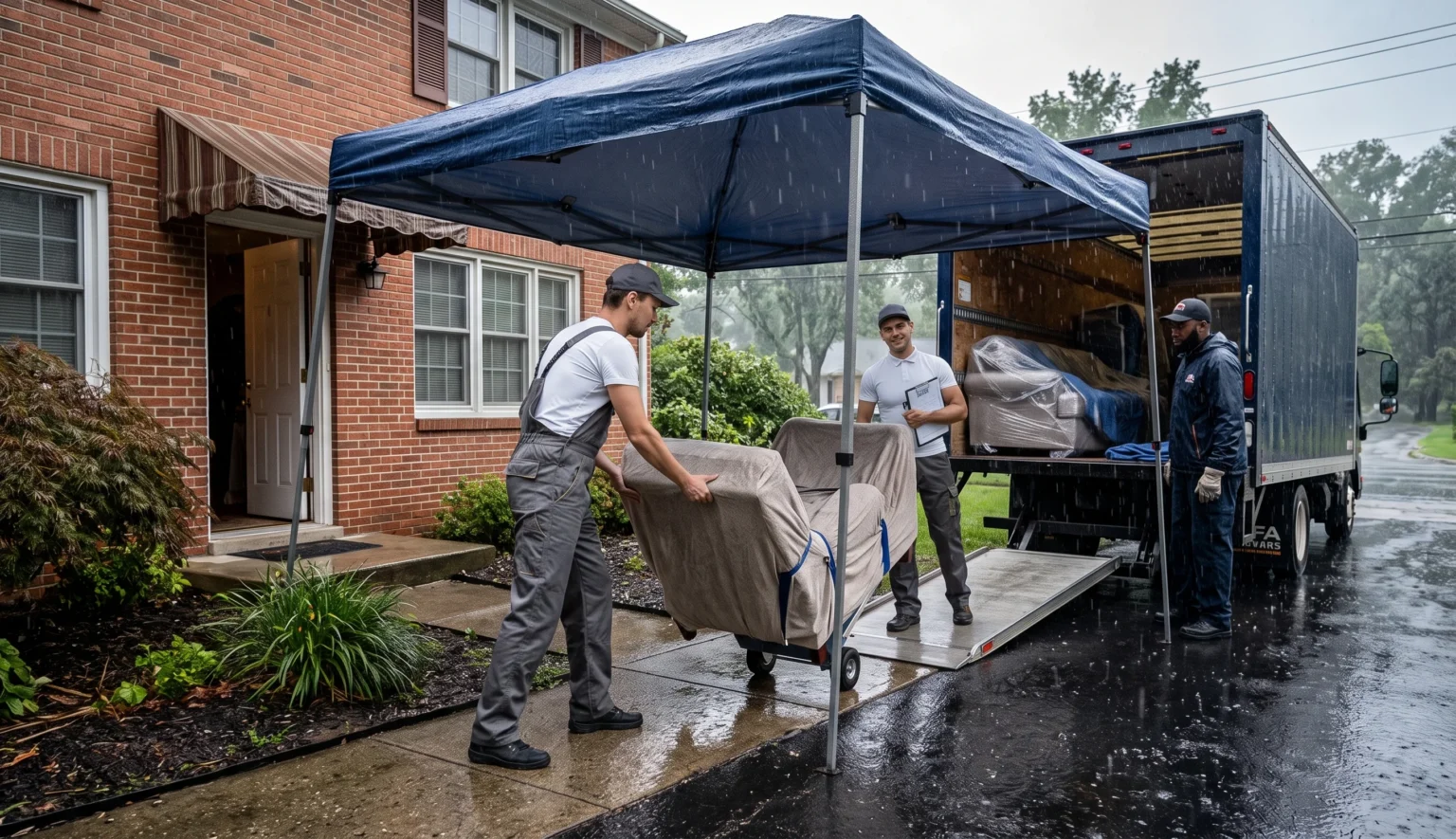
Protect furniture before it reaches the doorway rather than waiting until it is already exposed to rain. Use plastic covers or stretch wrap to create a moisture barrier, then add moving blankets when additional cushioning is needed. Since moving blankets can absorb water, cover them with plastic when rain is expected.
Create a Covered Path
Keep furniture under cover for as much of the route as possible between the home and moving truck. A garage, covered entrance, canopy, or other sheltered area can reduce exposure to rain. Organize the loading process beforehand so furniture spends as little time outside as possible.
Protect Indoor Floors
Wet shoes can make floors slippery and may leave water or mud throughout the home. Place suitable floor protection along the path between the furniture and the exit. Keeping the route clean and dry also gives movers better footing when carrying heavy or bulky furniture.
Dry Furniture Before Loading
Inspect furniture for moisture as it reaches the truck and wipe off water whenever possible. Do not leave wet furniture wrapped tightly in materials that can trap moisture for an extended period. Drying exposed surfaces before loading can help reduce the risk of moisture-related damage during transportation.
How to Protect Furniture From Snow and Ice
Snow and ice create additional challenges because freezing temperatures can combine with slippery surfaces and moisture. Furniture should be protected from snow while walkways and loading areas need to remain as clear and safe as possible.
- Clear Walkways First: Remove snow and ice from driveways, steps, sidewalks, and other areas used during the move. Keeping these paths clear reduces slipping hazards and makes it easier to move heavy furniture safely.
- Use Floor Protection: Place suitable mats, tarps, or floor coverings inside the home and near entryways. These materials can help prevent melted snow, salt, and debris from being tracked across floors.
- Cover Furniture Completely: Use protective covers to prevent snow and moisture from contacting furniture surfaces. Add moving blankets underneath waterproof protection when additional cushioning is needed.
- Wear Appropriate Footwear: Use shoes or boots with good traction when carrying furniture over wet, snowy, or icy surfaces. Avoid footwear that makes it difficult to maintain stable footing while lifting or carrying heavy items.
- Keep Furniture Off Wet Ground: Avoid placing furniture directly on snow, ice, or wet pavement while preparing it for loading. Use a suitable dolly or protected surface to keep furniture cleaner and reduce unnecessary moisture exposure.
- Move During Safer Conditions: If conditions become dangerously icy or a severe winter storm develops, consider postponing the move. Protecting people is more important than maintaining a moving schedule during genuinely hazardous conditions.
How to Move Furniture During Hot or Humid Weather
Hot and humid conditions can also affect moving furniture, especially when people are performing heavy physical work. Scheduling demanding work during cooler parts of the day and protecting furniture from excessive heat and moisture can make the process more manageable.
Move During Cooler Hours
Whenever possible, schedule loading and unloading during the morning or evening rather than the hottest part of the day. Heavy furniture requires significant physical effort, and extreme heat can make the work more difficult. Cooler conditions can help movers work more comfortably while reducing unnecessary heat exposure.
Protect Upholstered Furniture
Upholstered furniture can be vulnerable to moisture, dirt, and excessive heat during transportation. Use appropriate protective covers and keep upholstered pieces away from unnecessary outdoor exposure. Avoid sealing damp upholstery inside plastic for extended periods because trapped moisture can create problems.
Protect Wooden Furniture
Wooden furniture should be protected from direct moisture as well as extreme environmental changes when possible. Wrap and pad wooden pieces before moving them outside, and avoid leaving them exposed to hot or humid conditions longer than necessary. Careful handling can also reduce scratches and surface damage.
Keep Movers Hydrated
Moving heavy furniture in hot weather can be physically demanding, so everyone involved should take appropriate breaks and stay hydrated. Avoid pushing through excessive heat or fatigue because tired movers are more likely to lose control of bulky furniture. Schedule the work realistically rather than trying to finish everything as quickly as possible.
How to Move Furniture During Strong Winds
Strong winds can make bulky furniture difficult to control, especially when carrying large items such as sofas, mattresses, tables, and cabinets. Wind can also move lightweight protective materials or create additional hazards around the loading area.
- Check Wind Conditions: Evaluate whether the wind is strong enough to make carrying large furniture unsafe. If conditions are difficult to control, postpone the move until the weather becomes safer.
- Secure Plastic Covers: Loose plastic and tarps can catch wind and become difficult to manage while carrying furniture. Secure protective materials properly without creating loose sections that could interfere with handling.
- Use Enough Helpers: Large furniture may require multiple people to maintain control during windy conditions. Coordinate movements before lifting so everyone knows when to move, stop, and set the furniture down.
- Protect Lightweight Items: Secure boxes, padding, and other lightweight materials so they cannot blow away. Keeping the loading area organized prevents loose materials from becoming trip hazards or interfering with the move.
- Avoid Outdoor Exposure: Minimize the amount of time furniture remains outside between the house and moving truck. A planned route and organized loading process can reduce exposure to wind and other weather conditions.
How to Safely Carry Furniture During Bad Weather
Weather protection is only part of a safe furniture move. Wet, snowy, or slippery conditions can make lifting and carrying more difficult, so use appropriate equipment and maintain clear communication between everyone involved.
Clear the Moving Path
Before lifting furniture, remove boxes, decorations, cords, rugs, and other obstacles from the route. Check the doorway, stairs, driveway, and path to the moving truck for water, ice, mud, or other hazards. A clear route gives movers more room to maneuver large furniture safely.
Use a Furniture Dolly
A furniture dolly can reduce the amount of time heavy items need to be carried manually. Use the equipment on surfaces where it can move safely and secure the furniture before rolling it. Proper equipment can make large pieces easier to control while reducing physical strain.
Lift With Proper Technique
When furniture must be lifted manually, bend your knees and use your legs rather than lifting primarily with your back. Keep the furniture close to your body and avoid twisting while carrying it. Communicate clearly with your moving partner before lifting, turning, or setting the furniture down.
Wear Shoes With Good Traction
Wet floors, muddy walkways, snow, and ice can increase the chance of slipping while carrying furniture. Wear closed-toe footwear with good traction and avoid shoes that make it difficult to maintain balance. Appropriate footwear is especially important when carrying heavy or oversized pieces.
Do Not Rush the Process
Bad weather can create pressure to finish loading quickly, but rushing can increase the chance of injuries and furniture damage. Focus on controlled movements and keep the path organized instead of trying to carry multiple pieces at once. If conditions become unsafe, stop and reassess the moving plan.
How to Protect Furniture Inside the Moving Truck
Furniture should remain protected after it leaves the house because rain or moisture can still enter during loading and unloading. Proper loading also prevents furniture from shifting and colliding with other belongings during transportation.
- Use Furniture Pads: Place furniture pads between pieces to reduce scratches, dents, and friction. Padding is especially useful when multiple large pieces are packed close together inside the truck.
- Add Plastic Protection: Use plastic over appropriate furniture coverings when moisture protection is necessary. Remember that plastic should not be used in a way that traps moisture against damp furniture for extended periods.
- Load Heavy Furniture Properly: Place heavier furniture in a stable position and distribute the load appropriately. Proper weight distribution can improve stability and reduce shifting during transportation.
- Secure Large Pieces: Use suitable straps or tie-downs to prevent furniture from moving during transit. Check that drawers, doors, and detachable components are secured before the vehicle starts moving.
- Fill Empty Spaces: Use suitable padding to reduce large gaps between furniture and other items. Reducing movement inside the truck helps minimize impacts while driving.
- Keep Wet Items Separate: Avoid placing damp furniture directly against dry belongings when possible. Give moisture-affected items appropriate attention before they are packed tightly for transportation.
Proper loading protects furniture from both bad weather and movement inside the truck. A well-organized load is less likely to shift, fall, or cause unnecessary damage during transit.
Common Mistakes to Avoid When Moving Furniture in Bad Weather
Poor preparation can make bad weather much more damaging to furniture and more dangerous for the people moving it. Avoiding a few common mistakes can help you maintain better control throughout the relocation.
- Using Moving Blankets Without Waterproof Protection: Moving blankets provide cushioning but can absorb rain rather than block it. Cover weather-exposed blankets with appropriate plastic protection to reduce moisture exposure.
- Leaving Furniture Outside Too Long: Furniture exposed to rain, snow, or extreme conditions can suffer unnecessary damage. Plan the route and loading process so each piece spends as little time outdoors as possible.
- Moving Across Icy Walkways: Carrying heavy furniture over ice increases the chance of slips and loss of control. Clear and treat walkways before moving or postpone the work if the route cannot be made reasonably safe.
- Ignoring Wet Floors: Water tracked indoors can create slippery surfaces for movers carrying heavy furniture. Use suitable floor protection and keep wet areas under control throughout the loading process.
- Forgetting to Secure Furniture: Unsecured furniture can shift, fall, or collide with other items during transportation. Use appropriate tie-downs and check the load before driving.
- Rushing Because of the Weather: Trying to finish quickly can lead to poor lifting techniques, collisions, and avoidable injuries. Work efficiently but maintain controlled movements and stop if weather conditions become unsafe.
- Wrapping Wet Furniture Too Tightly: Sealing moisture against furniture can create additional problems during storage or transportation. Dry exposed surfaces when possible and avoid trapping significant moisture beneath protective materials.
Avoiding these mistakes helps protect both your furniture and the people handling it during difficult weather conditions.
When Should You Postpone Moving Furniture?
Not every weather condition can be safely managed with additional covers and equipment. If the forecast includes severe thunderstorms, lightning, flooding, dangerous winds, heavy ice, or other hazardous conditions, postponing the move may be the safest option.
Severe Thunderstorms
Lightning and severe thunderstorms can make outdoor moving dangerous, particularly when people are carrying large furniture between buildings. Monitor weather conditions and avoid continuing outdoor work when storms create a serious safety risk. If possible, wait until the storm passes and conditions become safer.
Flooded or Waterlogged Areas
Flooded driveways, streets, sidewalks, or entrances can prevent furniture from being moved safely. Standing water can also damage furniture and create hidden hazards beneath the surface. If flooding affects the moving route, consider delaying the move until the area is safe and accessible.
Dangerous Wind Conditions
Strong winds can make large furniture difficult to control and may create additional hazards around the property. Bulky pieces can act like sails and become harder to carry safely. If the wind prevents movers from maintaining control, wait for conditions to improve.
Severe Ice or Snow
Heavy snow and ice can make driveways, stairs, sidewalks, and loading areas unsafe. Clear the route when practical, but do not attempt to move heavy furniture if surfaces remain dangerously slippery. Rescheduling can be safer than risking serious injury or damaging valuable furniture.
Benefits of Hiring Professional Movers During Bad Weather
Professional movers have experience handling large and heavy furniture and can bring appropriate equipment for lifting, padding, loading, and securing belongings. Their experience can be especially valuable when weather conditions make the moving process more complicated.
- Reduce Weather Exposure: Professional movers can organize loading and carrying efficiently to limit the amount of time furniture spends outdoors. A planned process can help reduce unnecessary exposure to rain, snow, wind, and moisture.
- Use Proper Equipment: Movers can use dollies, moving straps, furniture pads, and other equipment designed for handling large belongings. Proper equipment can reduce physical strain and make bulky furniture easier to control.
- Protect Furniture: Experienced movers know how to wrap and pad furniture before transportation. Appropriate protection can reduce the risk of scratches, dents, moisture exposure, and other damage.
- Improve Moving Safety: Professional movers understand proper lifting techniques and can coordinate the handling of heavy furniture. This can reduce the risk of injuries caused by awkward lifting or uncontrolled movement.
- Protect Floors and Doorways: Movers can prepare pathways and use protective materials to reduce damage to floors, walls, and door frames. This is particularly important when wet shoes and bulky furniture are involved.
- Load the Truck Properly: Professional movers can arrange and secure furniture, so it is less likely to shift during transportation. Proper loading helps protect large pieces and other belongings throughout the journey.
- Save Time and Effort: Having professionals handle heavy furniture allows you to focus on other parts of your relocation. A coordinated moving process can also reduce the time you and your family spend working in difficult weather.
Hiring professional movers can make a weather-affected move more manageable while reducing the physical effort involved. If conditions are challenging, experienced movers can help you complete the relocation with better preparation and equipment.
Trust AFA Movers for Reliable Furniture Moving Services Houston
Moving furniture during bad weather requires more than simply covering your belongings and carrying them outside. Proper weather protection, safe pathways, appropriate equipment, and careful loading can help prevent furniture damage while reducing risks during the move.
AFA Movers provides professional moving services in Houston to help handle furniture and household belongings safely and efficiently. Whether you’re moving locally or preparing for a larger relocation, their experienced team can help protect your furniture and make the moving process smoother, even when weather conditions create additional challenges.