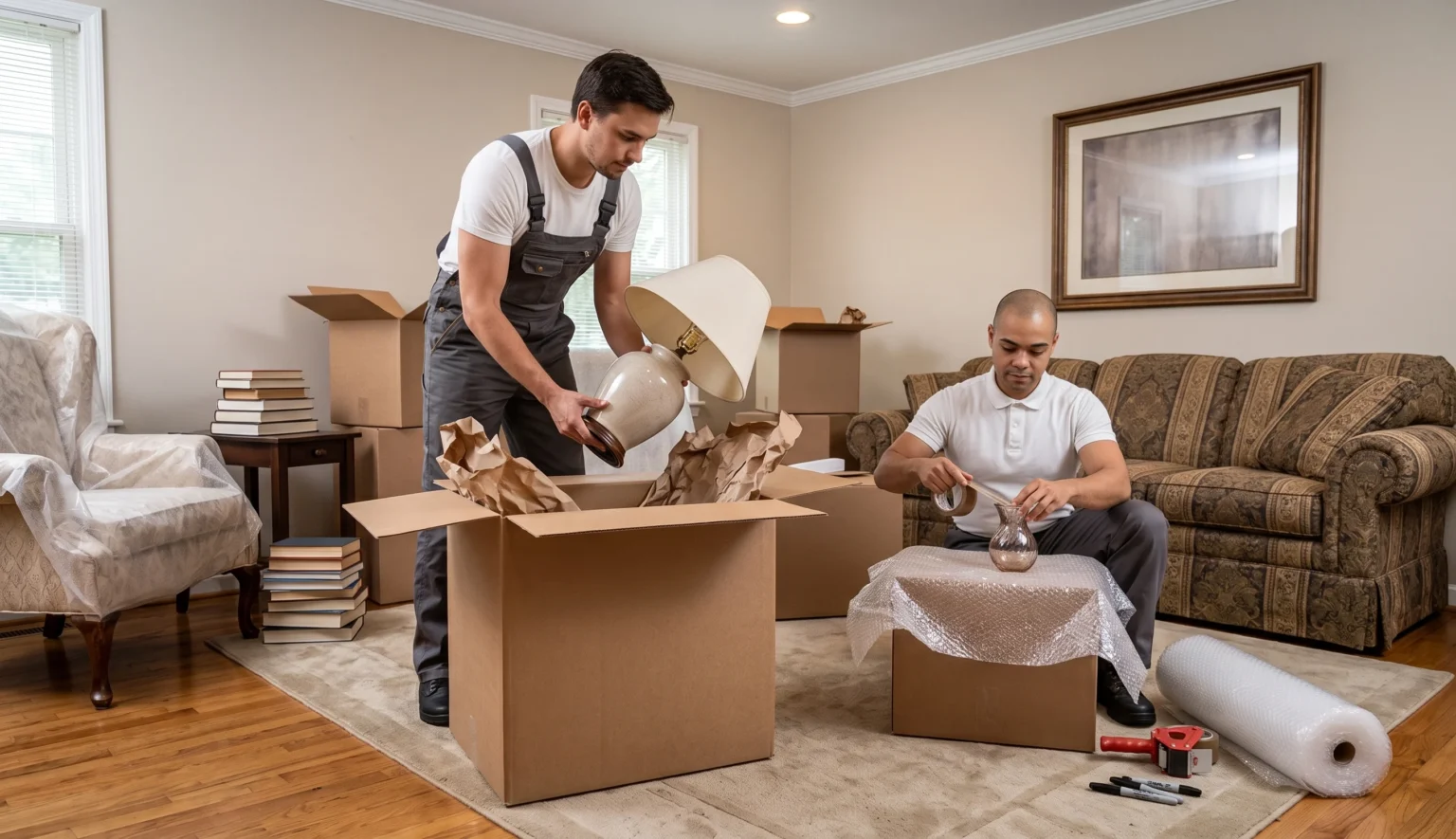
Yes, many professional moving companies offer packing services in addition to loading, transportation, and unloading. Depending on the company and service package you choose, movers may pack your entire home or help with specific rooms and belongings.
Professional packing can save significant time and physical effort, especially when you have a large household, fragile belongings, or a short moving timeline. Before hiring movers, confirm exactly what they pack, whether packing materials are included, and whether the service costs extra.
Do Movers Pack Your Belongings?
Many full-service movers can pack your belongings for you, but packing is not automatically included with every moving service. Full-service moving commonly combines packing, loading, transportation, and unloading, while other moving options may let you select packing separately.
Some companies also offer partial packing, allowing you to pack most of your belongings yourself while professionals handle fragile items, difficult rooms, or other areas that require additional assistance.
What Do Movers Pack for You?
Professional packers can handle many common household belongings and use appropriate techniques to prepare them for transportation. The exact items and level of service depend on the moving company and the package you select.
- Kitchen Items: Movers can pack dishes, cookware, glasses, small appliances, and other kitchen belongings using appropriate protective materials. Fragile kitchenware can receive additional cushioning to reduce the risk of breakage during transportation.
- Clothing: Packers can organize and box everyday clothing, shoes, accessories, and other wardrobe items. Specialized wardrobe boxes may also be used for clothing that needs to remain hanging during transportation.
- Books: Movers can carefully pack books and other reading materials into appropriately sized boxes. Smaller boxes are useful for heavier items because they make the boxes easier and safer to lift.
- Decorations: Pictures, mirrors, decorative accessories, and other household décor can be wrapped and protected before being boxed. Fragile decorations may require additional padding to reduce the risk of scratches or breakage.
- Electronics: Professional packers can prepare televisions, computers, gaming equipment, and other electronics for transportation. Original packaging may be useful when available, while additional protective materials can help safeguard equipment.
- Furniture: Movers can often wrap and protect furniture before loading it onto the moving truck. Larger pieces may also be disassembled when appropriate to make handling and transportation easier.
- Fragile Items: Professional packers can provide additional care for glassware, artwork, mirrors, collectibles, and other delicate belongings. Proper cushioning and protective materials help reduce the risk of damage during handling and transportation.
A professional packing service can be particularly useful when you have a large household or simply do not have enough time to pack everything yourself.
Do Movers Provide Packing Materials?
Packing materials may be included with some full-service moving packages, while other movers may charge separately for supplies. Before scheduling the service, ask whether the company provides boxes, packing paper, bubble wrap, tape, furniture pads, and other materials.
Knowing what is included helps you understand the total cost of the service and prevents you from purchasing supplies unnecessarily. If you choose a labor-only packing service, you may be expected to provide the materials yourself.
What Is Included With Professional Packing Services?
Professional packing services can range from packing a few specific items to preparing an entire household for transportation. The exact scope should be confirmed with the moving company before the service begins.
- Sorting and Organizing: Packers can work through household belongings and organize items into appropriate boxes. You should still decide what you want to keep, donate, sell, or discard before the packing process begins.
- Wrapping Fragile Items: Delicate belongings can receive protective wrapping and cushioning before being placed into boxes. This can help reduce damage caused by impacts, movement, and contact with other items.
- Box Packing: Movers can place household belongings into appropriately sized boxes and organize them for transportation. Proper box selection can make packed items easier to handle and reduce the risk of overloaded boxes.
- Box Labeling: Packed boxes can be labeled according to their contents or destination room. Clear labeling makes it easier to identify belongings and organize the unloading process at your new home.
- Furniture Protection: Movers can wrap furniture with moving blankets, stretch wrap, or other protective materials. This helps reduce scratches, dents, and other damage during loading and transportation.
- Furniture Disassembly: Some full-service moving companies can disassemble larger furniture pieces when necessary. Disassembled furniture can be easier to maneuver through doorways, staircases, hallways, and other tight spaces.
- Unpacking Services: Some moving companies also offer unpacking after your belongings arrive at the new home. Depending on the service, movers may remove items from boxes and help with basic setup or disposal of packing materials.
Full-service moving can therefore cover much more than simply carrying boxes from one home to another. The specific services included should always be confirmed before booking.
How Does Professional Packing Work?
Professional packing usually begins with an assessment of the belongings and the amount of work required. Packers then bring or use the agreed-upon supplies, protect the belongings, place them into boxes, and organize the packed items for loading.
Assess Your Packing Needs
Before packing begins, determine whether you need the entire home packed or only certain rooms and belongings. A professional crew can work according to the scope of service you select, such as full-home packing, kitchen packing, or fragile-item packing. Make sure you identify valuables and belongings that require special handling. This helps the movers prepare for the job properly.
Prepare the Packing Materials
Depending on the service agreement, movers may provide boxes, packing paper, bubble wrap, tape, protective padding, and other materials. The required supplies depend on the type and quantity of belongings being packed. Fragile items generally require more protective materials than ordinary household goods. Confirm beforehand which supplies are included in your quote.
Pack and Protect Your Belongings
Professional packers wrap fragile belongings and place items into suitable boxes according to their size and weight. They can organize similar belongings together and use cushioning materials to reduce movement inside boxes. Furniture may also be wrapped or padded separately before loading. Proper packing helps prepare your belongings for safe handling during transportation.
Label the Packed Boxes
Boxes should be labeled so you can identify their contents and destination room after the move. Clear labels make unloading and unpacking more organized and reduce the time spent searching for specific belongings. You can also ask movers to identify boxes containing fragile items. A consistent labeling system makes the transition into your new home easier.
Load the Moving Truck
After packing is complete, the movers can load the boxes and furniture into the moving truck. Heavy items are positioned carefully while fragile belongings receive appropriate protection and placement. Furniture can be secured to minimize shifting during transportation. Proper loading is an important part of protecting everything that was carefully packed.
Can Movers Pack Only Certain Items?
Yes, many moving companies offer partial or customized packing services instead of requiring customers to have their entire home packed. You may choose professional help for a specific room, fragile belongings, furniture, or another part of the move that is difficult to handle yourself.
Partial packing can be a useful compromise if you want to save money while still getting professional assistance with the most time-consuming or delicate parts of your move.
- Kitchen Packing: Professional packers can handle dishes, glassware, cookware, and appliances while you pack other rooms yourself. This can be useful because kitchens often contain many small and fragile items that take considerable time to organize.
- Fragile-Only Packing: You can ask professionals to focus specifically on delicate items such as glassware, artwork, mirrors, or collectibles. This allows you to handle ordinary belongings while getting specialized assistance where the risk of damage is higher.
- Furniture Packing: Movers can wrap and protect larger furniture pieces before loading them onto the truck. This can save you time while reducing the physical effort involved in preparing bulky items.
- Garage Packing: Garages often contain heavy tools, equipment, and miscellaneous belongings that can be difficult to organize. Professional assistance can help sort, pack, and prepare these items for transportation.
- Last-Minute Packing: If you have not finished packing before moving day, professional packers may be able to help complete the remaining work. Availability depends on the moving company, so request the service as early as possible.
Partial packing allows you to customize the amount of professional assistance you receive instead of paying for services you do not need.
What Do Movers Usually Not Pack?
Professional movers may have restrictions on certain belongings because of safety, legal, insurance, or transportation concerns. The exact list varies between companies, so ask for their prohibited or restricted-items list before packing day.
- Hazardous Materials: Gasoline, propane, certain chemicals, explosives, and other dangerous materials may not be accepted for transportation. Never assume a potentially hazardous item can be loaded into the moving truck without checking with your mover.
- Perishable Food: Fresh foods and other perishable items may not be suitable for a standard household shipment. Ask your moving company which food products are permitted and how they should be prepared for transportation.
- Certain Plants: Plants may face restrictions depending on the destination and transportation requirements. Check the applicable rules before deciding whether plants should travel with your household belongings.
- Important Documents: Passports, financial records, identification, and other irreplaceable documents should remain under your personal control. Keep these items with you rather than placing them inside ordinary moving boxes.
- Valuables: Jewelry, cash, collectibles, and other highly valuable personal belongings may require special arrangements. Discuss valuable items with your moving company and consider keeping particularly important possessions with you.
- Personal Essentials: Medications, chargers, toiletries, and a change of clothing should remain accessible during the move. Pack these necessities separately so you do not have to search through boxes after arriving.
Knowing what movers will and will not pack helps you prepare your belongings correctly before the crew arrives.
Should You Pack Yourself or Hire Movers?
Packing yourself gives you more control over how your belongings are organized and can reduce labor costs, while professional packing saves time and physical effort. The better option depends on your budget, schedule, household size, and how much assistance you need.
Packing Yourself
DIY packing can work well when you have enough time and prefer to organize your belongings personally. You can pack at your own pace, decide how every box is arranged, and reduce the amount you spend on professional labor. However, packing an entire household can take days or even weeks. You also need to purchase appropriate materials and handle fragile items yourself.
Hiring Professional Packers
Professional packers can complete large amounts of packing work efficiently and know how to protect common household belongings. This can save you significant time and reduce the physical effort involved in preparing for a move. Professional packing can be particularly useful when you have a large home, fragile possessions, or a tight moving schedule. The main disadvantage is the additional cost.
Choosing Partial Packing
Partial packing provides a middle option between doing everything yourself and hiring professionals for the entire home. You can pack simple belongings while asking movers to handle fragile items, furniture, or difficult rooms. This approach can reduce professional labor costs while still giving you assistance where you need it most. Many packing services can be customized according to your requirements.
How Much Does It Cost to Have Movers Pack for You?
The cost of professional packing depends on factors such as the amount of belongings, number of rooms, type of items, packing materials, moving distance, and services selected. Full-service moving generally costs more because it can include packing, loading, transportation, and unloading.
- Size of Your Home: A larger home usually contains more belongings and requires more packing time and materials. The number of rooms and volume of household goods can therefore affect the total packing cost.
- Amount of Belongings: The more items you need packed, the more labor and supplies may be required. Decluttering before professional packers arrive can reduce the amount of work and potentially lower the overall cost.
- Fragile Items: Glassware, artwork, mirrors, electronics, and collectibles may require additional protective materials and careful handling. Specialized packing can increase the time and materials needed for the job.
- Packing Materials: Boxes, tape, packing paper, bubble wrap, and protective materials may be included or charged separately. Ask your mover exactly which materials are included in the estimate before booking the service.
- Partial or Full Packing: Packing only selected rooms or belongings generally requires less labor than packing an entire home. Choosing partial packing can be an option when you want professional help without paying for a complete packing service.
- Moving Distance: Long-distance moves can involve different pricing structures and additional transportation considerations. Ask whether packing is priced separately from the transportation portion of your moving quote.
Always request a detailed estimate that clearly identifies packing labor, materials, and any additional services so you understand the total cost before moving day.
Benefits of Having Movers Pack for You
Hiring professional packers can take one of the most time-consuming parts of moving off your shoulders. Experienced crews can organize, protect, and box household belongings while you focus on other parts of your relocation.
- Hazardous Materials: Gasoline, propane, certain chemicals, explosives, and other dangerous materials may not be accepted for transportation. Never assume a potentially hazardous item can be loaded into the moving truck without checking with your mover.
- Perishable Food: Fresh foods and other perishable items may not be suitable for a standard household shipment. Ask your moving company which food products are permitted and how they should be prepared for transportation.
- Certain Plants: Plants may face restrictions depending on the destination and transportation requirements. Check the applicable rules before deciding whether plants should travel with your household belongings.
- Important Documents: Passports, financial records, identification, and other irreplaceable documents should remain under your personal control. Keep these items with you rather than placing them inside ordinary moving boxes.
- Valuables: Jewelry, cash, collectibles, and other highly valuable personal belongings may require special arrangements. Discuss valuable items with your moving company and consider keeping particularly important possessions with you.
- Personal Essentials: Medications, chargers, toiletries, and a change of clothing should remain accessible during the move. Pack these necessities separately so you do not have to search through boxes after arriving.
Professional packing can make moving significantly more convenient, particularly when time, physical effort, or fragile belongings are major concerns.
What Should You Do Before Movers Arrive to Pack?
Even when professionals are handling the packing, you should prepare your home before they arrive. Decluttering, identifying valuables, and separating personal necessities can help the packing crew work more efficiently.
- Declutter Your Home: Decide what you want to keep, donate, sell, recycle, or discard before packing begins. There is little benefit in paying to pack and transport belongings you no longer want.
- Separate Personal Essentials: Set aside clothing, toiletries, medications, documents, chargers, and other items you will need during the move. Keep these belongings with you instead of allowing them to be packed into the moving truck.
- Identify Valuable Items: Point out valuable, fragile, or sentimental belongings before the packing process starts. Discuss any special handling requirements with the moving company in advance.
- Keep Important Documents With You: Gather passports, identification, financial records, and other important paperwork. Store these documents securely in a personal bag rather than placing them inside standard moving boxes.
- Remove Prohibited Items: Check your moving company’s list of items that cannot be transported. Dispose of or arrange alternative transportation for restricted belongings before packing day.
- Create an Essentials Box: Prepare a clearly identified box containing basic items for your first night in the new home. Keep this box separate so it can be accessed immediately after the move.
Preparing these items before the movers arrive helps prevent confusion and allows the packing crew to focus on the belongings that actually need professional assistance.
Trust AFA Movers for Reliable Packing Services Houston
Yes, movers can pack for you when you choose a company that offers professional packing services. Depending on your needs, you can have an entire household packed or request help with specific rooms, fragile belongings, furniture, or other difficult items.
AFA Movers provides professional packing services in Houston using quality packing materials and experienced moving techniques. Whether you need help packing your entire home or require assistance with selected belongings, their team can help make the preparation process more organized and less stressful.